hardware and software for electronic music 
Aalto1.3

Aalto

A patchable synth with an innovative UI and distinctive sounds.

Soundplane A

Soundplane A

The computer music controller with the
feel of an acoustic instrument.
DIY

DIY Projects

How to make your own controllers.

News

Sunday, May 12, 2013
by Randy Jones

Aalto T-shirts!

Just in time for summer, Aalto T-shirts are now in stock! Oft-requested and long-awaited, these shirts are the first physical artifacts besides the Soundplane to come out of the Labs. They start out soft, will wear in gracefully and are likely to give you super patching powers.

We asked our good friend David Chandler to tidy up his Aalto manual cover for a larger reproduction size, and printed it in a subtle aqua gradient on American Apparel’s Sustainable Edition organic cotton shirts in Galaxy Blue. Nerdy yet surfy!

We are selling these nice shirts for $20. Shipping is by US First Class Mail, for $4 within the USA and $16 internationally. PayPal will add these costs automatically when you enter your shipping adress.


[EDIT] Sorry, sold out! I may do another run via preorder later this Summer.

Wednesday, April 24, 2013
by Randy Jones

Soundplane variations

Before these instruments left the shop I snagged a few photos, to show the variations in wood that give each instrument a unique personality. When I put a surface together with the enclosure I try to find pairs of grains that somehow speak to each other. It’s a happy task each time because it means that the Soundplane is almost done.

Waves with planets:

Small rays:

Big waves:

Friday, April 05, 2013
by Randy Jones

Soundplane disassembly / assembly video

Here is a video showing how to take apart a Soundplane and put it back together again. I designed the Soundplane to be easily hackable and repairable; hopefully what you see here gets that across.

If you don’t have a Soundplane but are interested in making a DIY version, this will probably give you some ideas!

Monday, March 11, 2013
by Randy Jones

New Soundplane software!

There's a lot going on here at the Labs. While finishing up production on the second run of Soundplanes, I've been able to rewrite the client code that does touch tracking. Here's the result in a very quick and rough demo video. I'm playing a string sound with Aalto over OSC, and simultaneously, a piano with Logic over MIDI.

The new code stores a snapshot of finger pressure at each point on the Soundplane surface. It uses this information to determine what is and what isn't a touch with much better confidence than before. It also normalizes the force over the surface for smoother playing.

Here is a ten minute video walkthrough of the new features, showing how to do the calibration. It picks up a little after I manage to throw away the preferences, but is still probably of interest only to Soundplane owners.

Thursday, March 07, 2013
by Randy Jones

Sea of Soundplanes

A happy sight: new Soundplane surfaces hot off the laser cutter, ready for sanding and assembly.

These new inlays are mother-of-pearl—photos do not do them justice.

Friday, February 08, 2013
by Randy Jones

Artist profile: Alex Smoke

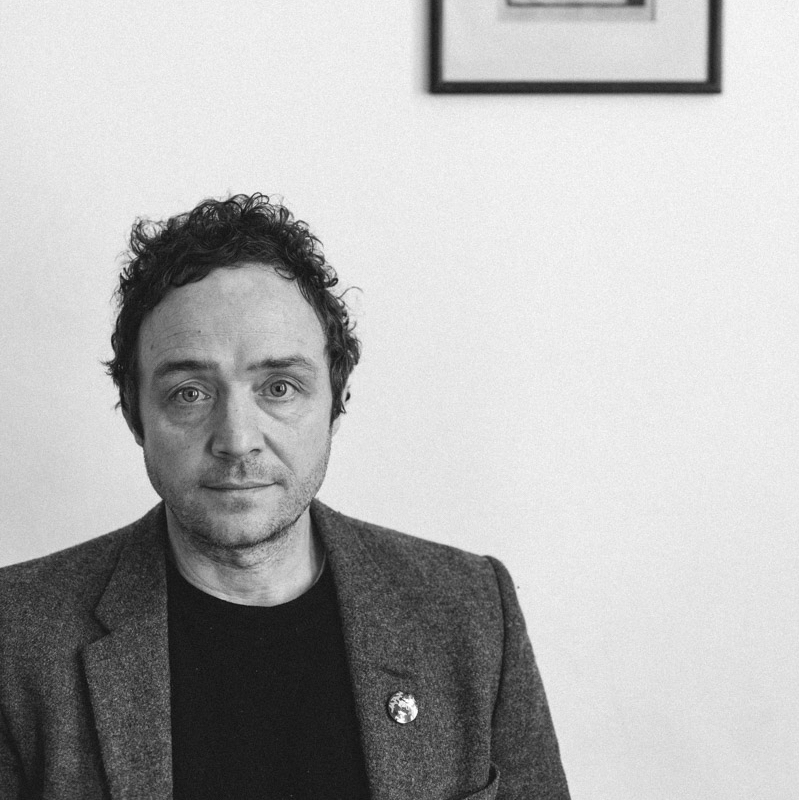
Alex Menzies is a Scottish producer and DJ. As Alex Smoke, he has carved out a unique path through the dance music world since 1994 with three albums and numerous singles that display a rare talent for combining modern compositional ideas with the demands of the dancefloor. His most recent album, the self-titled Wraetlic, marks a new project that is based more on stripped-down pop structures and expressive sound design.

Long Glasgow-based, Alex has recently moved to Berlin. By email, I asked him a little about his new music and his writing process.

photo: Steffi Rossol

I like this new music and also the name “Wraetlic” very much. It and the track titles prime me to delve into a particular kind of kind of story, but leave ample room for mystery.

Cheers! Yeah anything too explicit, and the mystery has gone……things are better left unsaid and just skirted around. Just ask David Lynch.

You are working in an territory that I think of as in between tracks and songs, from where a lot of my favorite music has come. Can you point to any influences in this area?

Yeah it's very fertile ground as far as I'm concerned, somewhere you can experiment completely but still be able to keep it comprehensible by having a vocal narrative. You can have the weirdest stuff happening in the background, but if there's a vocal, it's suddenly very accessible. People who do it well are Matthew Dear, Khonnor, How To Dress Well, Autre ne Veut, Hype Williams, to name a few. They all come from totally different angles, but the voice is like a hook for the brain to latch on to.

You said that Aalto was an inspiration on the album. Are you able to say anything about how that happens? For example, some people talk about synthesizers as tools that help you get sounds you’ve imagined in your head out into the world. Others approach them more as boxes of mystery and possibility.

Firstly, yes it is no lie that Aalto was a big part of the production of this album, and came along at the time I was just starting the project. It really inspired me. There are several things about it which immediately made it stand out and invited me to experiment, the first thing being the simplicity of the layout which just makes it so approachable, despite the fact that it is semi-modular. I know I can create interesting sounds if I have access to that routing, so it is instantly creative, and encourages experimentation. It has a purity of conception about it, if that makes sense!

I am also the kind of producer who likes to have the ability to really make the sounds in my head, and again Aalto has some very unusual features which make it possible to create timbres which I am very fond of, especially bells and clicky, unpredictable tones. The Waveguide too is a big part of the appeal for me. That sound is so much more alive than a normal oscillator, and you get the sense that you are playing with a living thing, that has to be coaxed to do what you want of it. Unlike the standard oscillator, which just blurts out its noise for you to cosh into submission with a filter.

photo: Alex Smoke

I hear some short melodic parts that could have been done in Aalto’s sequencer. Was it useful that way?

I tend to use the sequencer as a control source for the pitch only when the sequence is either very simple or if the pitches aren't so important. For normal melodic sequences, I prefer the control of piano-roll, as it is much easier to create many pattern variations that way, and also to use that MIDI information for other parts etc. Where I do use the sequencer in particular is with the oscillator’s linear pitch input to create huge fast jumps between pitches, resulting in strange beeps and noises, especially in conjunction with the noise oscillator. Also, altering the offset of the sequencer at the same time creates some brilliantly complex tones.

What was your setup like for making this music? Do you stick to one software environment for recording? Do you do any hardware mixing or processing?

I am a simple man….I just use Logic for the sequencing aspects, although I also use Kyma as a sound design tool which is a separate environment. For me the most important thing of all is getting the ideas down fast so as not to lose any ideas, and software wins this battle hands down. I care a lot about my sound sources but again, the software is now so good that external synths are a largely unnecessary luxury for me. That's not to say I don't hanker after a Jupiter 4 or a Buchla, but they aren't strictly required, especially now that I have Aalto to fill that Buchla-shaped gap in my sound-arsenal! There is a certain amount of fetishism about hardware gear, and many people I think just have it for that added appeal. I am also less of an experimenter, in the sense that I want to write the stuff in my head, and hardware is especially suited to open experimentation where you approach with an empty idea.

Place is always important to making music, and software tools offer interesting possibilities that way. Some of this album sounds to me like it could have been made in a remote cabin or monastery. Any truth to that?

I will actually include a picture of my studio at exactly the time I was making the Wraetlic album, and you will be heavily underwhelmed……haha…… In a way you're right, in that my head is somewhere between a remote cabin and a monastery! I would still love to go on a retreat to write an album and I have always intended it, but this album was not the one. It is all down to your inner world, and that is I think the most brilliant thing of all about making music now. That you can take your inner world and express it, whilst surrounded by the most abject banality, anywhere at all. But it's that inner world that matters.

photo: Alex Smoke

Would you like to mention any other tools (hardware, software, consumables, rituals) that are important to your process?

My working processes alternate between the shockingly simple (such as doing vocals using the MacBook's inbuilt microphone) and the heavily labour-intensive (programming Kyma), but the only common threads are a lot of tea and working late at night. I have favourite software (there's a list on my website if it's of any interest) but I find that ultimately you need very few tools, as long as they are just the right ones. I know I could have just Aalto, Absynth and Soundtoys and still make 90% of what I want to. Although I'd also miss Kyma for that last 10% of madness.

Alex Smoke presents: Wraetlic is out now on Convex Industries.

Wednesday, February 06, 2013
by Randy Jones

Soundplane run 2 sold out

Soundplanes 31-60 are now spoken for! If you were waiting to order one, please keep in touch because we plan to make more instruments soon.

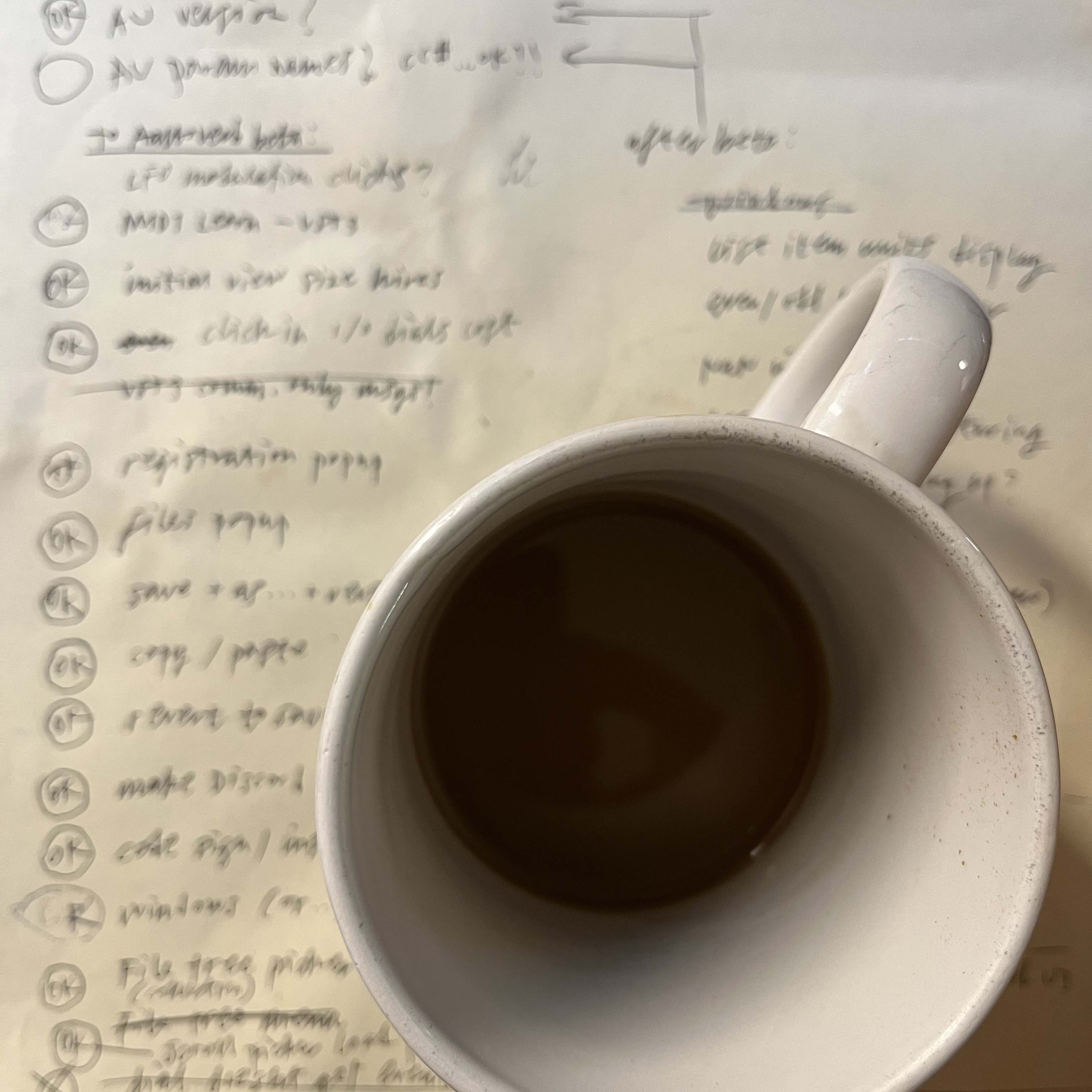
Here's a view of the prototype instrument from the second run with an empty cup of coffee---the typical view of my desk. As you can see we got an especially nice batch of veneer this time that is deeply variegated. While we wait on the final surface parts from our fabricators I am working on the Soundplane client code to improve the touch detection. More details soon.

Thursday, January 24, 2013
by Randy Jones

Aalto 1.3.2

Aalto 1.3.2 demo and release versions for Mac and Windows are here on the site.

1.3.2 changes:

added new patch save features:
- quick save as version
- save (over existing)
- revert to saved
added revert to saved via MIDI (program change 128)
fixed sync problems in sequencer
fixed signal viewer cold startup in UI
restored bipolar dials in UI

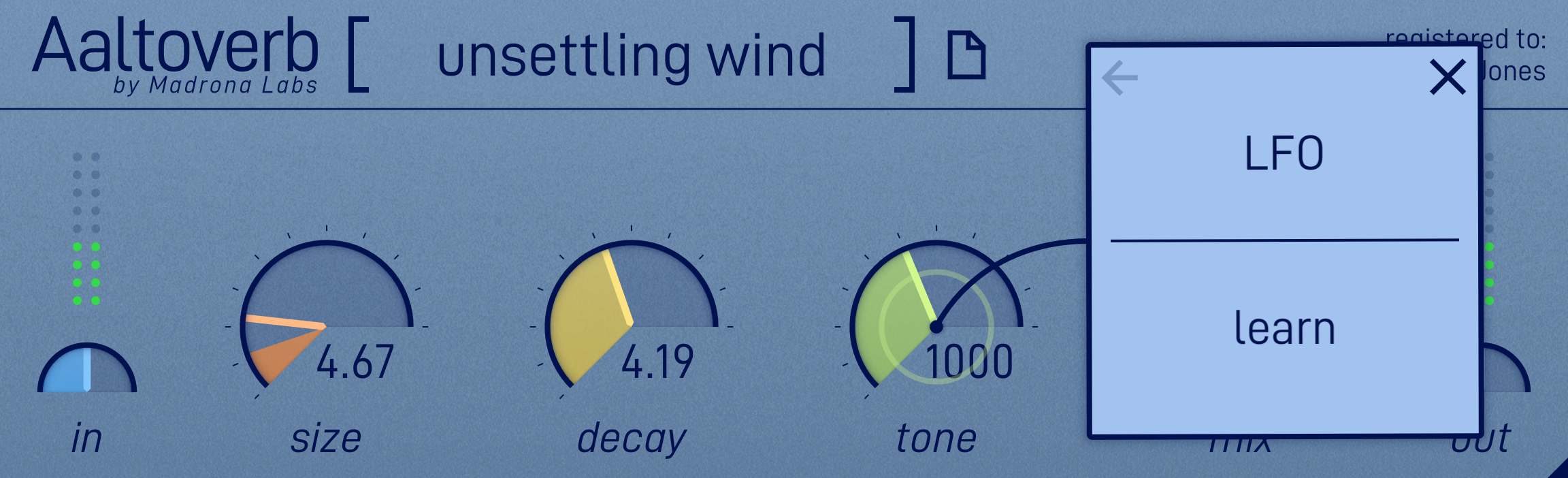
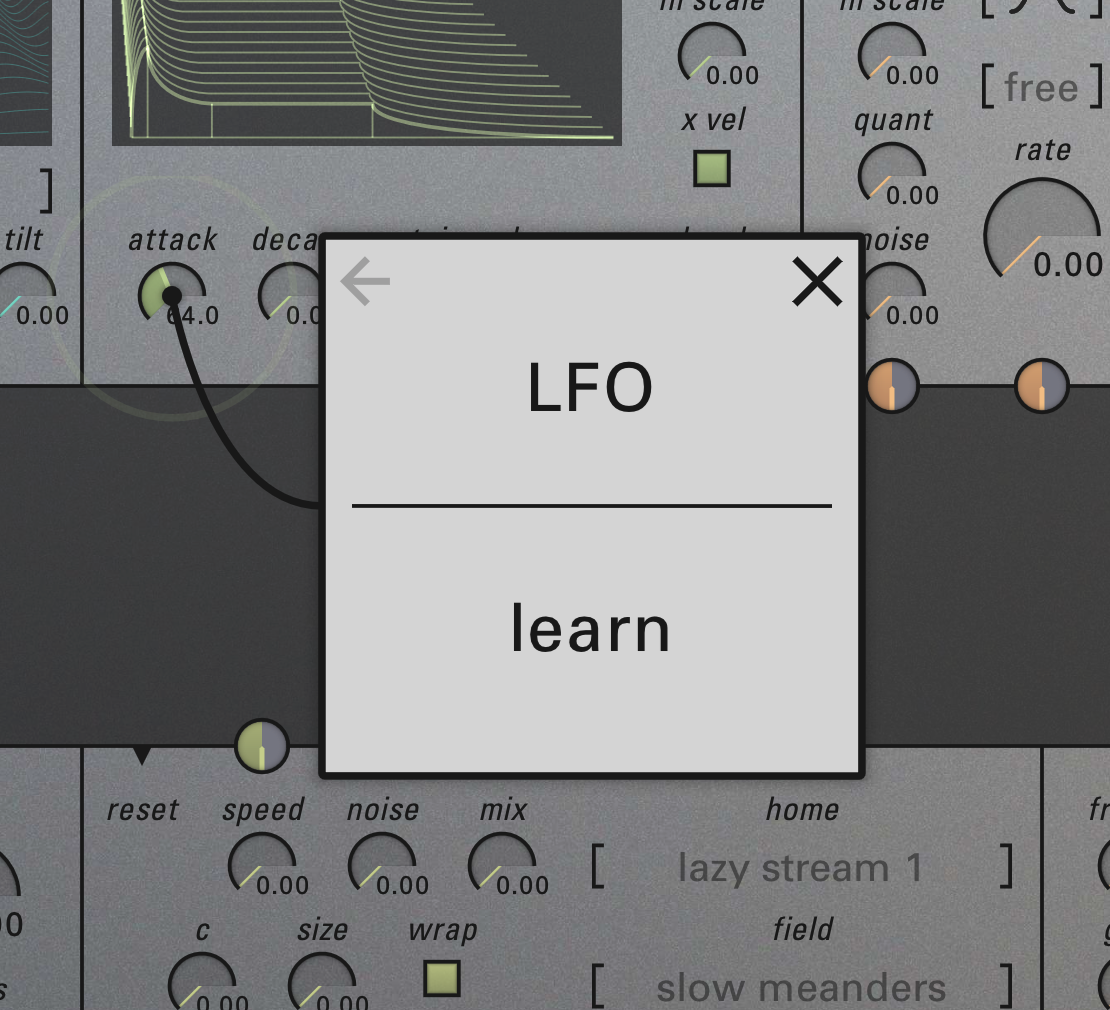
The revert to saved via MIDI came out of the workflow discussion we were just having here on the forums, and works especially well within Ableton Live. What you can do with it in Live is set up your clip to set program change 128 upon clip start. Then, Aalto will reset to the previously saved values every time the clip starts. This makes it much easier to tweak the patch while recording a bunch of takes.

The manual has not yet caught up to the new features----I will do that soon.

I am sending out a bugfix version for the Beat Special Edition in the next day or so. I will post in the forums when I find out how this is being distributed.

Thursday, January 03, 2013
by Randy Jones

Better workflow for Aalto

I was making a little music with Aalto over the holidays. I was trying to set up a flow where I could just tweak the knobs while recording audio out of Aalto, and record a lot of tracks that I would just mix together to get the finished piece. But, as you may have found, this is easier said than done! I have ideas on how to make things better.

Tweaking while recording

One problem is that the main DAWs don't let you record audio while tweaking knobs of a synth or effect. Logic has a real time bounce, for example, but locks out control changes while it's going on. Live won't record audio out of a synth unless you are in render mode.

One workaround is to use Numerology from Five12. It's great for on-the-fly sequencing and tweaking, and will let you record audio while you do this. It's a little less than ideal in that the audio is all sent to automatically-named files that you have to sort out later. But in even allowing recording while tweaking it offers a cool feature that the big DAWs don't. The drawback for me is that it's not the environment I want to mix in.

I checked out Reaper and did not get far enough to decide whether this would be a good solution for live recording. I could deal with learning to mix in it if it offered this capability. Anyone tried this in Reaper?

Finally, one solution might be a simple record button in Aalto. But I try to avoid adding things that the DAW should be doing well. Anyone up for writing a DAW this year with Live’s ease-of-use and timing, Logic’s MIDI implementation and Reaper’s efficiency?

Resetting

Another problem with the flow as it stands is resetting Aalto back to a patch at the start of a loop or arrangement. I'd like to set up one patch, do a take of knob-tweaking, and then automatically have Aalto recall a previous patch or saved state back at the beginning to set up the same jumping-off point for exploration. This is a little difficult now.

One way to do it, currently, is using MIDI program automation. Aalto 1.3 added the ability (underdocumented, currently) to switch programs via MIDI program change messages. See here for details. So, you can make a patch, save it to the "MIDI Programs" directory, and record a program change message in your DAW of choice. This is fairly easy in Logic, and in Live looks clunky but possible. There's an extra step of saving a patch, though, every time you want to define a new starting point. Not ideal. Maybe I don't care about the patch in general but just as an element in one song.

Resetting the patch is also needed to make the flow sort-of-good in programs like Live and Logic that don't allow control changes. An offline bounce (much faster than real time) after each tweaking pass may not be a bad price to pay for recording in my environment of choice, and so I can simply record the parameter change data---but the reset is also essential here.

There are a few ideas I have for a solution. One is to add a menu choice "broadcast all parameters." This would do what it says, allowing parameter automation systems to capture the entire state of the plugin. I think that with more than 100 parameters, though, this might overwhelm the capabilities of the DAW, and would certainly make a mess of the param menus.

A refinement of that idea is to have two menu options, one to say "start keeping track of what parameters I changed," and another to reset only those changed parameters. This would definitely work, the only drawback is a little added complexity. You would still need to be careful to save your song with all the params at their initial states!

I'm happy that Aalto 1.3.1 is very solid after the 1.3 shakeup, and I'm looking forward to working on some of these workflow details now. I welcome your suggestions!

Thursday, December 27, 2012
by Randy Jones

A trip to the Cheewhat Giant

A few weeks ago I went with my good friend Alex Bell to see the biggest living tree in Canada.

Our trip started with an early morning drive out from Vancouver, a ferry to Nanaimo, a couple more hours’ drive to Youbou, in the vicinity of a sign meant to provoke uncertainty:

and the start of the shitty roads. Three hours later, after traveling over gravel and potholes meant for logging trucks, we turned off onto an even shittier road, not unlike a couple of deer trails side by side, that led to our first night’s campsite on a beautiful, waterfall-fed lake. The next morning we drove on just a few more km, and unloaded the Subaru.

Alex had along a case with a Nikon DSLR and a robot panning head, for the purpose of taking the biggest photograph of the biggest tree in Canada. I think the photo will be over a billion pixels, which he plans to print out in the neighborhood of life-size at some point. Can't wait to see it. I spent a lot of time lying nearby and listening to the babbling of the nearby creek, with the little whirr of the robot superimposed every minute or so. Here’s me next to the tree itself:

Alex making some much-needed coffee in the old-growth.

photos: Alexander Bell

You can find the coordinates for the tree pretty easily if you look around. It's pretty much in the middle of nowhere, and when it's cold and wet there is pretty much nobody else around for miles and miles, except bears. Recommended.